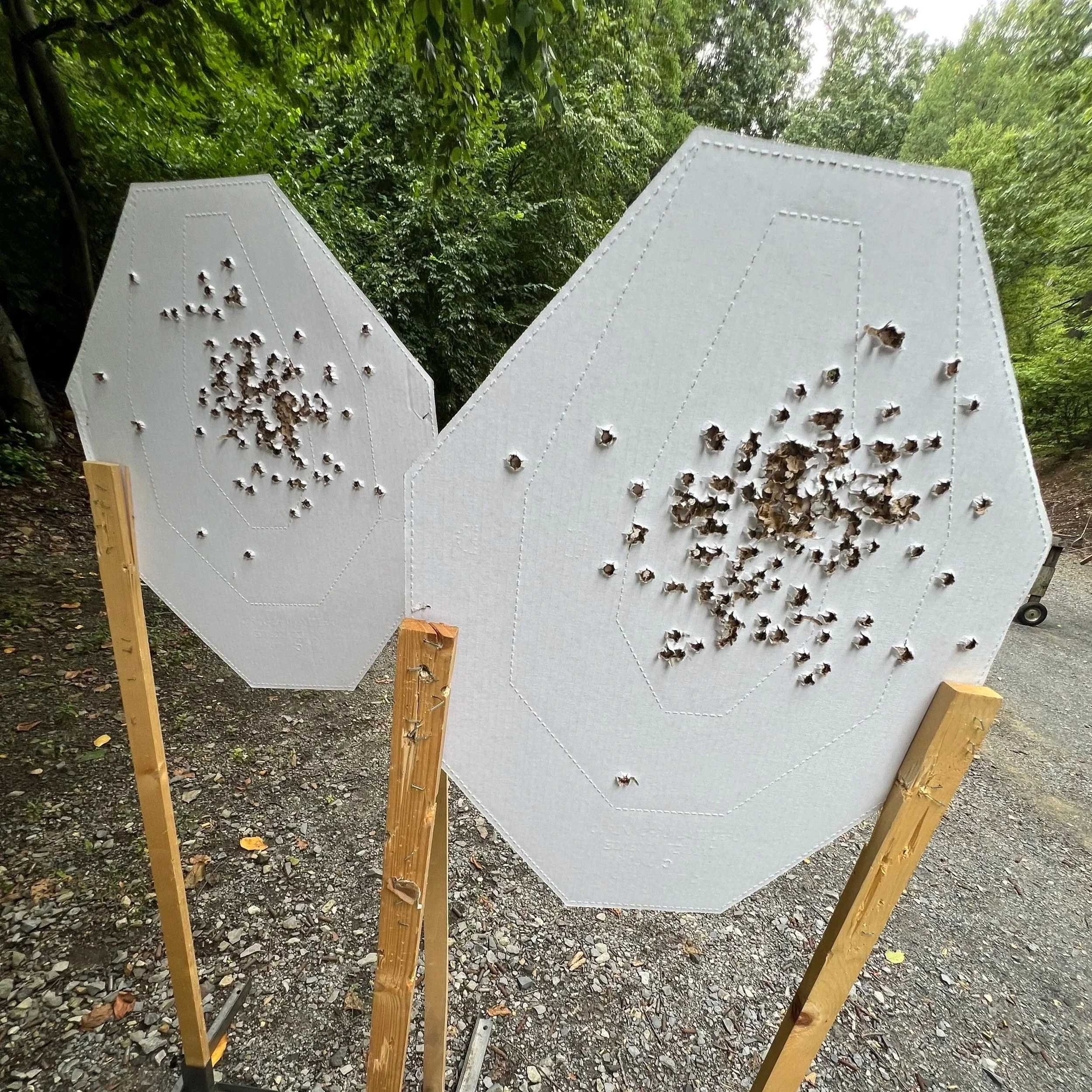
Is it better to train at an outdoor range or an indoor range? It’s not an either or question. Each brings something valuable to the table. Having access to both an outdoor and indoor gun range will give you the flexibility to train in all conditions.
Indoor gun ranges allow you to train all year round in any kind of weather. Here you can focus predominantly on marksmanship at relatively close distances. Indoor ranges are easily accessible and relatively easy to join. Even without a membership, you can usually walk in and rent a lane with just a photo ID. But, while convenient and comfortable, indoor ranges often have some restrictions on equipment, ammo, distance, holster work and speed. Unfortunately, training exclusively at an indoor gun range will limit skill development in key ways. Static, indoor practice from the bench may not adequately prepare you for home defense, every day carry or sport.
Training outdoors offers the opportunity to work dynamic movement exercises and farther distances. High berms allow for shooting from various angles up to 180°. Long ranges can exceed 100 yards, making them ideal for pistol and rifle. However, gaining access to an outdoor range can be difficult. Most are private. You can’t just walk up and rent a bay or a pit. Joining may require sponsorship by a current member. Or you may be waitlisted until a spot opens, which can take anywhere from one to three years. And once accepted, there are additional requirements during a probationary period. You’ll most likely be expected to attend a safety orientation, member meetings and log volunteer work hours. And, depending on where you live, an outdoor range may require some travel.
However, if you’re serious about developing your defensive pistol and rifle skills, do your due diligence and find an outdoor range that doesn’t restrict movement. Visit. If you like it, get on the waitlist. Joining a private outdoor club is generally much more cost effective than an indoor range. And it will give you an opportunity to introduce real-world conditions that will improve your practice and your performance.
To get the most out of your outdoor training, here’s a checklist of gear that will help you take full advantage of what an outdoor shooting range has to offer.
Must have:
Medical kit
Three target stands (allows you to change positioning of targets and mix up the depth and width of transitions vs. being limited by fixed lateral position of range backers)
4-6 ft Furring strips (1×2)
Cardboard targets (USPSA, IPSC, PCSL)
Heavy duty stapler, 1/2” staples
Beige, black and white 1” square pasters
Lead removing hand wipes
Nice to have:
Shot timer (to get an accurate measure of performance)
Paster gun (expedite pasting targets)
Variety of hard cover targets (to restrict scoring area and increase difficulty)
Heavy-duty AR550 steel target and stand, reduced C-zone, mini steel poppers, knock-down steel plates
Cones (to mark distances, to create fault lines, to designate positions)
Agility poles (act as mock walls and vision barriers for pistol exercises)
If you want to train at a higher level there really is no substitute for the outdoors. It’s a natural environment. It’s quieter. It’s safer than an indoor public range. You can work critical skills like draw stroke, distance, transitions and movement that you just can’t work on at an indoor range. Overall, it’s a much more enjoyable and productive experience that makes the investment worthwhile.